
APEDA License
APEDA License registration helps eligible exporters of scheduled agricultural and processed food products obtain the required registration with the Agricultural and Processed Food Products Export Development Authority. My Startup Solution assists businesses with eligibility checks, document preparation, application filing, and registration-related guidance to support their export activities.
Whats Included
- ✓ APEDA registration eligibility and product category assessment.
- ✓ Assistance with document collection and application preparation.
- ✓ Guidance for APEDA e-RCMC application submission through DGFT.
- ✓ Application status tracking and clarification support.
Get Free Expert Consultation
APEDA License
APEDA operates under the Ministry of Commerce and Industry, Government of India, and supports the development and promotion of agricultural and processed food product exports.
Exporters of APEDA-scheduled products are generally requir...
An APEDA License, commonly referred to as APEDA registration, is the Registration-cum-Membership Certificate (RCMC) issued for eligible exporters dealing in products covered by the Agricultural and Processed Food Products Export Development Authority (APEDA).
APEDA operates under the Ministry of Commerce and Industry, Government of India, and supports the development and promotion of agricultural and processed food product exports.
Exporters of APEDA-scheduled products are generally required to register with the authority under the applicable requirements. Applications for APEDA e-RCMC are submitted through the Directorate General of Foreign Trade (DGFT) portal after obtaining an Importer Exporter Code (IEC).
Who Needs APEDA Registration?
APEDA registration is relevant to Indian businesses exporting products covered under APEDA's scheduled categories. It may be suitable for:
- Agricultural product exporters.
- Fresh fruit and vegetable exporters.
- Processed food manufacturers and exporters.
- Rice, cereal, and grain exporters.
- Honey, dairy, and other eligible animal product exporters.
- Floriculture and seed exporters.
- Businesses exporting eligible beverages, confectionery, and other processed food products.
Before applying, businesses should confirm whether their products fall under APEDA's jurisdiction and check any additional product-specific export requirements.
Products Covered Under APEDA
APEDA covers several categories of agricultural and processed food products. These include:
1. Fruits and Vegetables
Eligible products include fresh mangoes, grapes, onions, walnuts, and other scheduled fruits and vegetables.
2. Processed Fruits and Vegetables
This category includes eligible dried or preserved vegetables, mango pulp, pickles, chutneys, and other processed fruit and vegetable products.
3. Cereals and Grain Products
Relevant products include basmati rice, non-basmati rice, wheat, other coarse grains, and eligible cereal preparations.
4. Animal Products
Scheduled categories include certain meat products, poultry products, dairy products, honey, and other specified animal products.
5. Other Processed Food Products
This category may include groundnuts, guar gum, jaggery, confectionery, cocoa products, and eligible alcoholic or non-alcoholic beverages.
6. Floriculture, Seeds, and Related Products
Eligible categories include floriculture products, vegetable seeds, and specified herbal and medicinal plants.
The exact coverage depends on the product classification under APEDA's current schedule.
Documents Required for APEDA License Registration
Applicants should prepare the documents and information required for their business type and selected product category.
Common requirements may include:
- Valid Importer Exporter Code (IEC) issued by DGFT.
- Business registration and constitution details.
- Bank certificate or other prescribed banking details.
- Applicant's identity and contact information, where required.
- Product details and the proposed export activity.
- Manufacturing or product-related registration documents, where applicable.
- Relevant certificates from the competent authority for specific product categories.
Manufacturer exporters may need to provide additional supporting documents depending on the products being registered. For example, certain categories may require relevant food safety or industry registration documents.
The final document list should be checked against the current application requirements on the official DGFT and APEDA portals.
APEDA License Registration Process
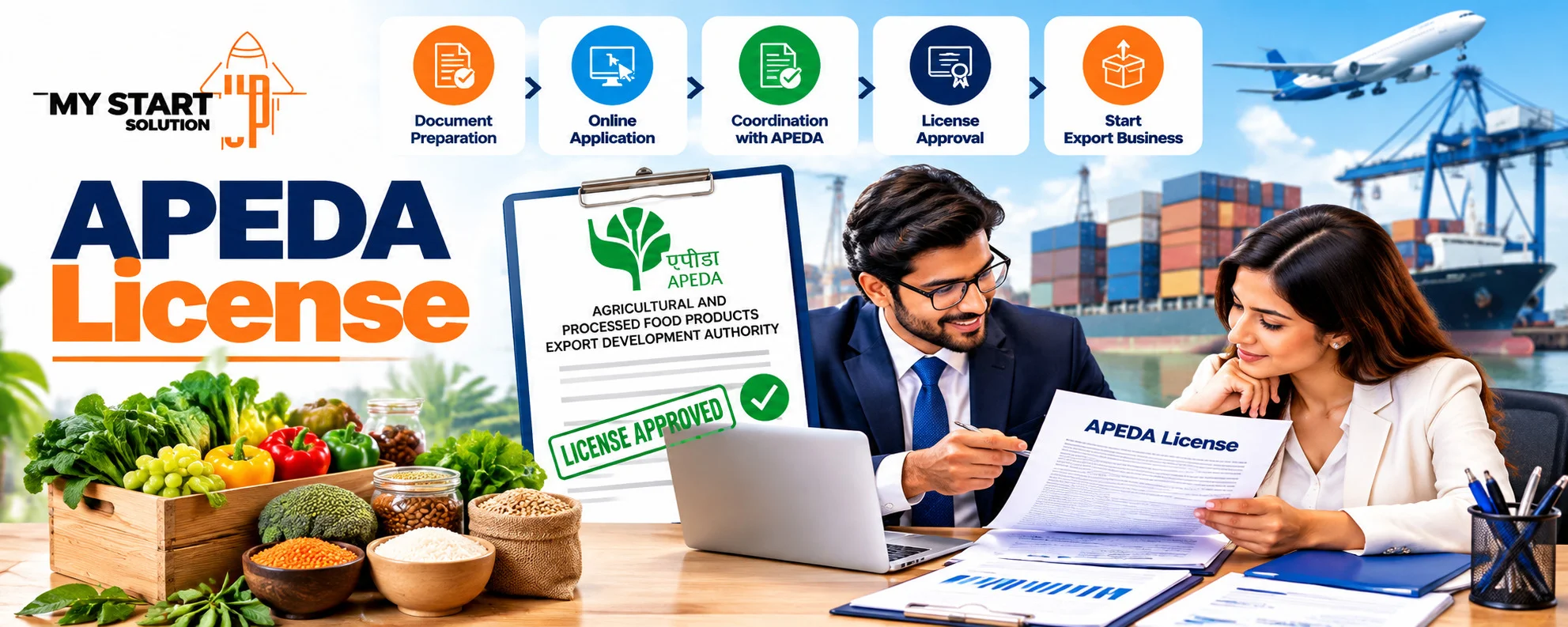
APEDA e-RCMC registration follows an online process. My Startup Solution can assist applicants in understanding and preparing for the main steps.
Step 1: Check Eligibility
Review the business activity and export products to determine whether APEDA registration is applicable.
Step 2: Obtain an IEC
An Importer Exporter Code from DGFT is a prerequisite for applying for APEDA e-RCMC. Applicants who do not have an IEC should address this requirement first.
Step 3: Prepare the Application
Collect the required business information, banking details, product information, and supporting documents.
Step 4: Submit the e-RCMC Application
Apply through the DGFT portal's e-RCMC facility and select the relevant export promotion authority and product category.
Step 5: Complete the Required Payment
Pay the applicable registration fee through the available official payment method, as specified on the portal.
Step 6: Track the Application
Monitor the application status and respond to any requests for additional information or document corrections.
Step 7: Receive the Certificate
Once the application is approved by the competent authority, the applicant can access the issued certificate through the applicable portal.
Processing time depends on the completeness of the application, the authority's review, and whether additional information is required.
Why Choose My Startup Solution for APEDA Registration?
Applying for export registration involves checking product eligibility, preparing business details, and submitting accurate information through the relevant portal.
My Startup Solution assists businesses with:
- Understanding APEDA registration requirements.
- Preparing the application and supporting documents.
- Reviewing business and product information before submission.
- Understanding application status updates and requests for clarification.
- Guidance on related registration and compliance requirements.
Our approach focuses on helping applicants understand the process and prepare the required information. Registration approval remains subject to the relevant authority's assessment.
Important Compliance Points After Registration
Receiving an APEDA RCMC is an important step, but exporters should also understand their continuing obligations.
Depending on the product and export activity, businesses may need to:
- Maintain accurate export and transaction records.
- Keep business and registration details updated.
- Follow applicable product quality, packaging, and labelling requirements.
- Comply with destination-country import regulations.
- Complete prescribed reporting or renewal requirements, where applicable.
- Obtain additional product-specific certificates or approvals when required.
APEDA registration alone does not replace other licences, food safety registrations, customs requirements, or destination-specific approvals that may apply to an export shipment.
Get Assistance With APEDA License Registration
If you plan to export agricultural or processed food products from India, confirming your registration requirements is a practical first step. Proper document preparation and accurate product classification can help you submit a more complete application.
Contact My Startup Solution for assistance with APEDA License registration, application documentation, and related export compliance requirements.
Eligibility Criteria for APEDA License
- Eligible Business Activities: Businesses involved in the export of scheduled agricultural and processed food products, such as fruits, vegetables, cereals, meat products, and processed foods, may need APEDA registration depending on their products and activities.
- Business Registration: Exporters should have a legally established business entity, such as a proprietorship, partnership firm, LLP, or company, with the necessary business details and supporting documents.
- Importer Exporter Code (IEC): An Importer Exporter Code issued by DGFT is generally required before applying for APEDA registration.
- Eligible Exporters: Merchant exporters and manufacturer exporters dealing in APEDA-scheduled products can apply for registration, subject to the applicable requirements.
- Compliance with APEDA Requirements: Applicants must provide accurate business and export-related information and meet the registration conditions applicable to their activities.
- Product Eligibility: APEDA registration applies to products listed under its jurisdiction. Exporters should verify whether their specific products fall within the scheduled categories before applying.
Documents required
Documents Required for APEDA License Registration
Registration process
A simple four-step process, start to finish.